

Written by: Naël El Kastani
Improving patient education with anatomical posters
Educational tools to simplify anatomy
Human anatomy posters, such as the Anatomical Chart: Muscle Chains of the Upper Limb, provide invaluable assistance to doctors in explaining how the human body works. This educational poster, with its precise illustrations of muscles, helps to demystify complex concepts. Let's take a concrete example: a patient suffering from shoulder pain will be able to better understand the causes of their condition thanks to this detailed anatomical chart. This educational poster, printed on high-quality paper, highlights the muscle chains of the upper limb with clear color illustrations and precise details. It thus offers a concrete overview of the skeletal and muscular systems.
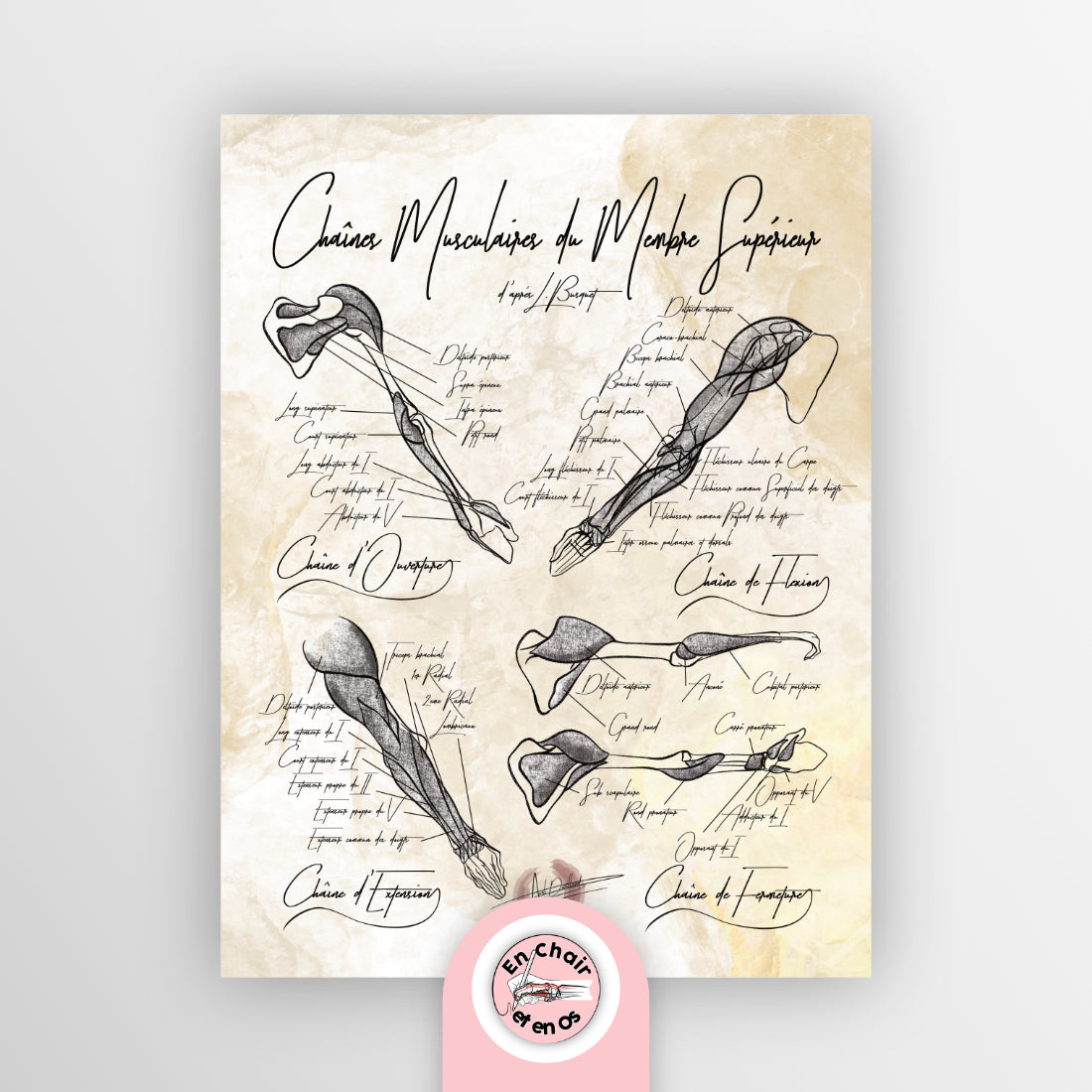
Adding one of these posters is an excellent way to offer patients a better understanding of how the human body functions. It allows for visualizing the interactions between muscles and joints, thereby increasing the clarity of explanations. This not only helps to better inform patients but also strengthens their confidence in the healthcare professional's recommendations. Each poster, available in different formats, becomes a valuable educational tool for making consultations more interactive and enriching, while promoting a more positive and engaging experience.
Offering an educational approach for all ages
Human anatomy posters are not limited to medical consultations for adults. In pediatric settings, a wall chart depicting the human skeleton or the muscles of the human body can have a significant impact. By capturing the attention of young patients, these anatomical posters allow for the explanation of body parts in a clear and visual way, thus facilitating their understanding and reducing their apprehension of medical procedures.

These anatomical charts, much more than simple decorative tools, also find their place among health students. Indeed, they constitute an essential resource for anatomy studies. A well-designed anatomy poster, detailing muscles, bones, or even specific body systems, becomes a true educational asset. Students can find crucial information on them that allows them to better visualize anatomical interactions, such as those between the human skeleton and muscles.
Creating a welcoming and reassuring environment for patients
Decorating a practice with vintage anatomy posters
Vintage posters find their place in healthcare facilities thanks to their dual function: conveying precise information while providing a unique aesthetic touch. Among them, the Anatomical Chart: Spine stands out for its educational utility and visual appeal. An anatomical wall poster detailing the complex structures of the spine enhances the care space, making it both functional and pleasant.
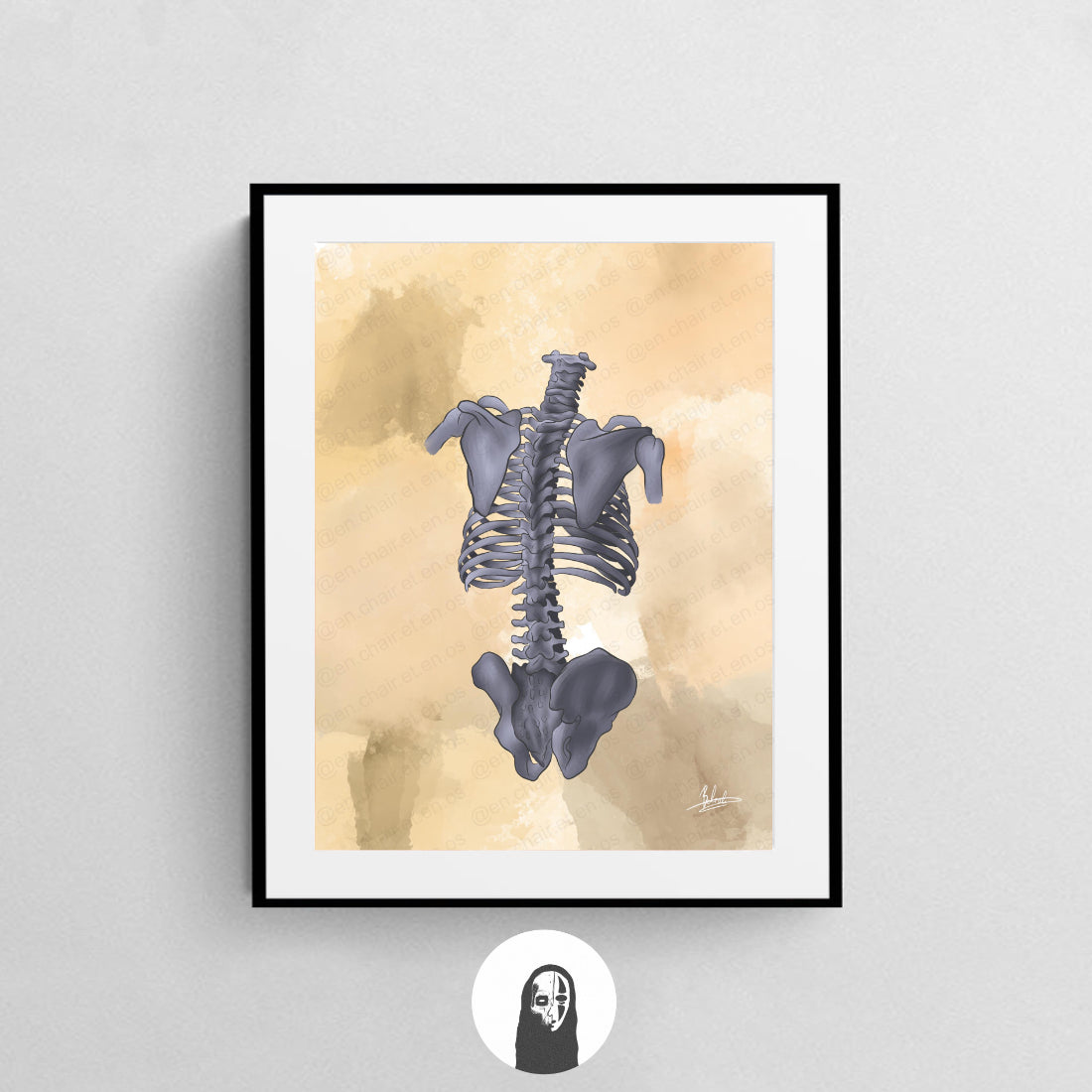
With its precise illustrations and detailed images, the spine chart captures patients' attention while facilitating their understanding of this essential part of the body. Healthcare professionals can use this wall poster to explain pathologies such as herniated discs or posture-related disorders, making consultations more interactive. The anatomy poster thus offers a clear overview of the vertebral segments, intervertebral discs, and the relationships with surrounding muscles.
Vintage anatomy posters, often printed on high-quality paper, incorporate decorative elements while retaining their educational function. Their aesthetic gives a unique character to a care space. Such an anatomical chart invites reflection and creates a welcoming setting, fostering patient well-being.
Creating a reassuring and educational atmosphere
By integrating an educational chart like the Anatomical Chart: Digestive Tract, doctors can not only soothe patients' concerns but also offer them a detailed overview of the body and how it functions. This anatomical chart, depicting the anatomy of the digestive system, is an ideal product for a healthcare environment. It encourages the patient to become more involved in their own care by providing complete and easy-to-understand information about the anatomy of the digestive system, from the mouth to the intestine.
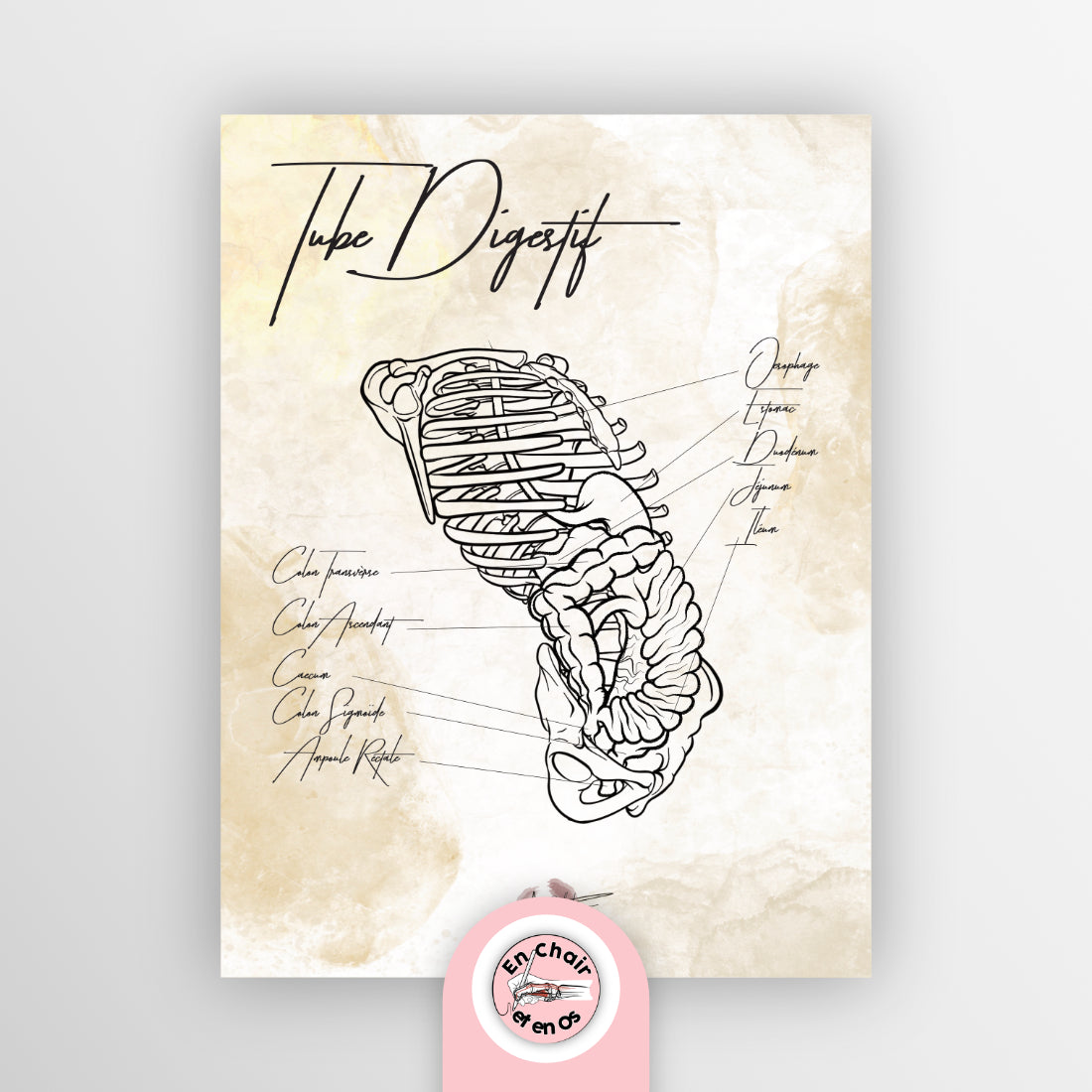
By choosing this anatomical chart, you offer a tool that is both instructive and practical, perfect for explaining the body's various processes. This anatomical chart thus adds to your collection of En Chair et En Os products, helping to create a reassuring and professional atmosphere for your patients while enriching your workspace.
Facilitating communication between practitioner and patient
Illustrating diagnoses with detailed anatomical posters
When a doctor explains a complex diagnosis, an anatomical chart can become an essential communication tool. For example, the Anatomical Chart: Weightlifting can be used to explain specific muscle movements, risks associated with poor posture, or common injuries in this field. This chart, precisely illustrating human musculature and body movements, makes explanations clearer and more understandable for patients. Thanks to this anatomical chart, patients can more easily visualize the areas of the body involved in weightlifting, thus facilitating the discussion of treatments and recommendations.

Furthermore, these educational products are available in various formats to adapt to all types of healthcare facilities. Adding this poster to your medical space helps to clearly visualize the muscles being worked, while improving the patient's understanding of the importance of technique and posture. This chart becomes an indispensable tool for promoting effective communication and strengthening patient trust in the practitioner's recommendations.
Fostering patient engagement in their care
A well-informed patient is an engaged patient. Anatomical posters, such as the Anatomical Chart: Back Muscles, allow practitioners to explain rehabilitation exercises or postural treatments in detail. By visualizing these anatomical details of the back muscles, patients become aware of the impact of their habits and are more inclined to follow medical recommendations. These educational posters offer a clear overview of different parts of the body, thus allowing patients to better understand the exercises to perform to improve their posture.
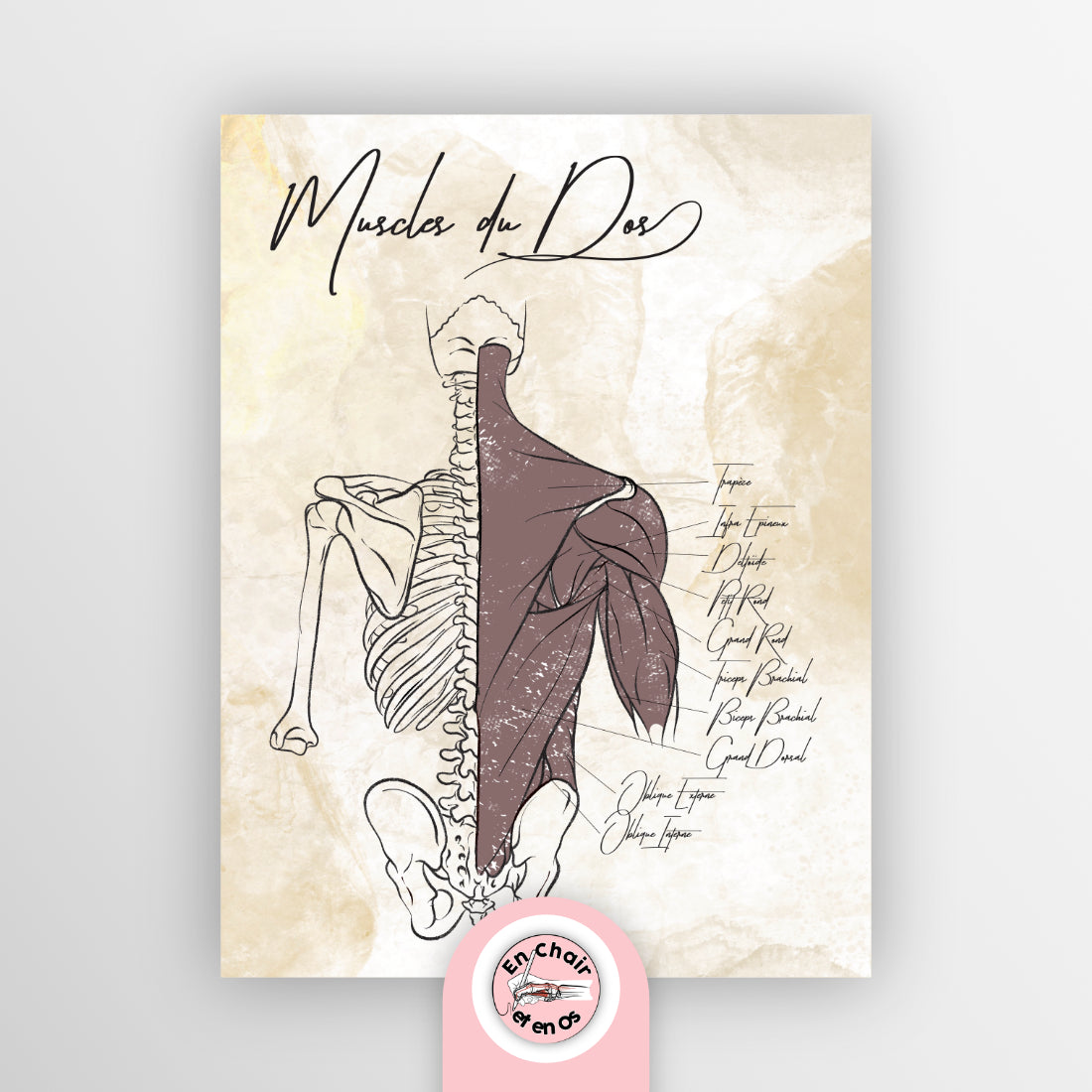
Using these posters in a doctor's office shows that the practitioner is doing everything possible to answer patients' questions and expectations. Anatomy posters, being both informative and decorative, represent an ideal product for improving patient satisfaction while strengthening the professional and modern image of the healthcare facility. These charts are an ideal resource for all healthcare professionals wishing to offer a complete and clear approach to treatments.
Conclusion
The anatomical posters available on our En Chair et En Os site are much more than just illustrations: they are didactic tools, communication supports, and essential elements to enrich the patient experience in a doctor's office. They not only allow the body's functioning to be explained in a clear and visual way but also make each consultation more interactive and engaging. Adding a poster to your medical space helps to strengthen patient understanding, improve communication, and foster an environment conducive to trust.