

Written by: Naël El Kastani
What if a simple anatomical drawing could transform your medical practice? In a world where patients are increasingly seeking understanding, clarity, and a connection with their own bodies, anatomy through drawing is becoming a tool for communication, learning, and trust. Whether you are an osteopath, physical therapist, general practitioner, or other healthcare professional, by integrating the anatomical charts available on our site En Chair et En Os, by choosing the right colors, optimizing furniture, and working on interior design, it is possible to create a harmonious and functional space.
A powerful educational tool to accompany your explanations
Visualizing complex systems: making the invisible visible
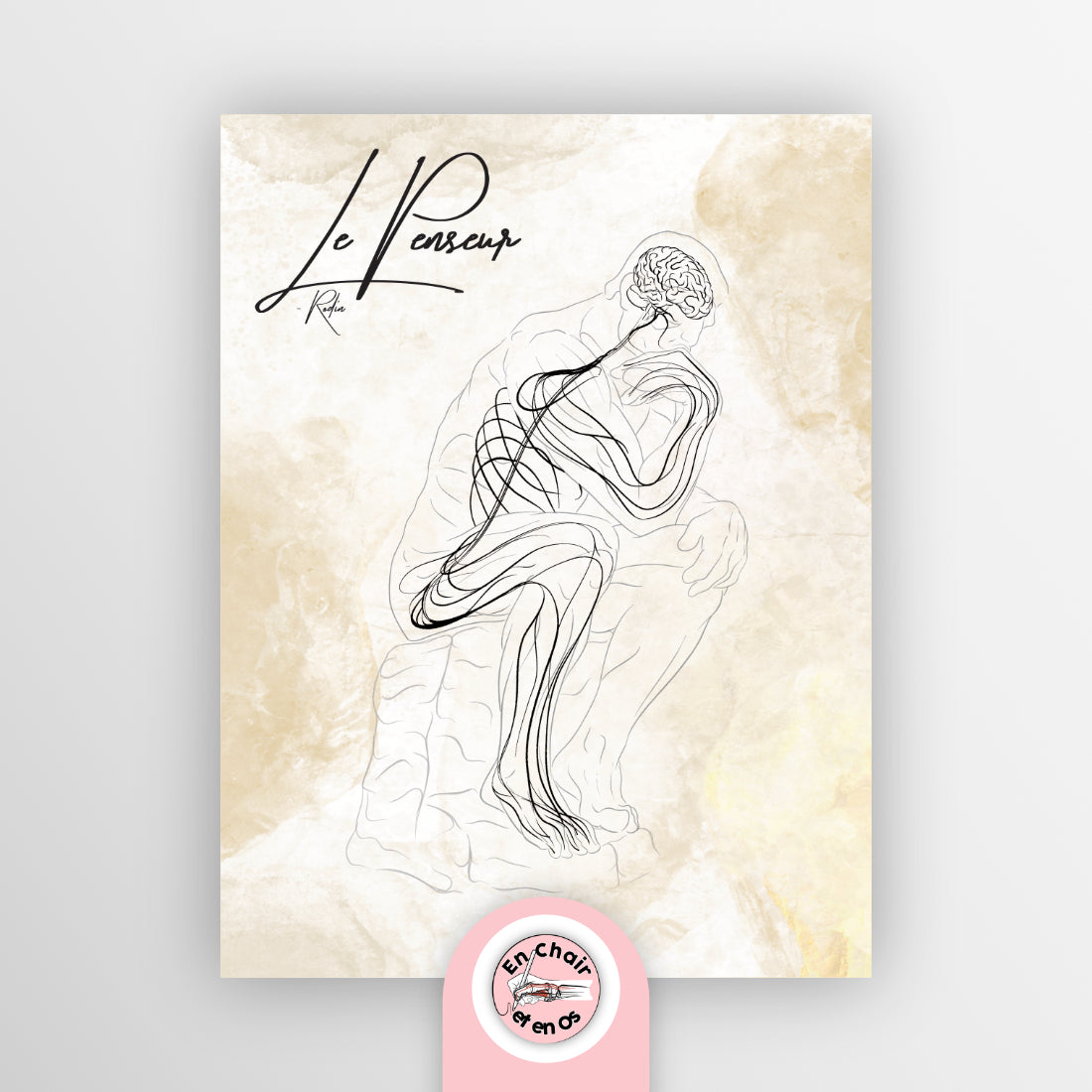
In the medical world, words are not always enough. Showing a drawing of the human body offers an immediate and intuitive reading of a system that is often abstract. An Anatomy chart - Nervous system, Rodin’s The Thinker makes it possible to illustrate nerve connections and cervical and cranial branches with finesse.
-
The model’s pose, the line of the back, the tilted head – everything helps to contextualize the complex organization of the nervous system.
-
This type of anatomical drawing allows for a better understanding of bodily function from a new angle.
-
The graphic, artistic, and detailed approach allows your patients to read their pain through a visual representation, thereby better understanding the link between their symptoms and their anatomy.
Thanks to this richly illustrated anatomical content, you no longer just convey information: you engage in a real dialogue. You transform that daunting blank page into a powerful educational tool. You offer a new way to learn anatomy that is more accessible, clearer, more effective, and above all, much more human.
The foot: an anchor point for clinical discourse
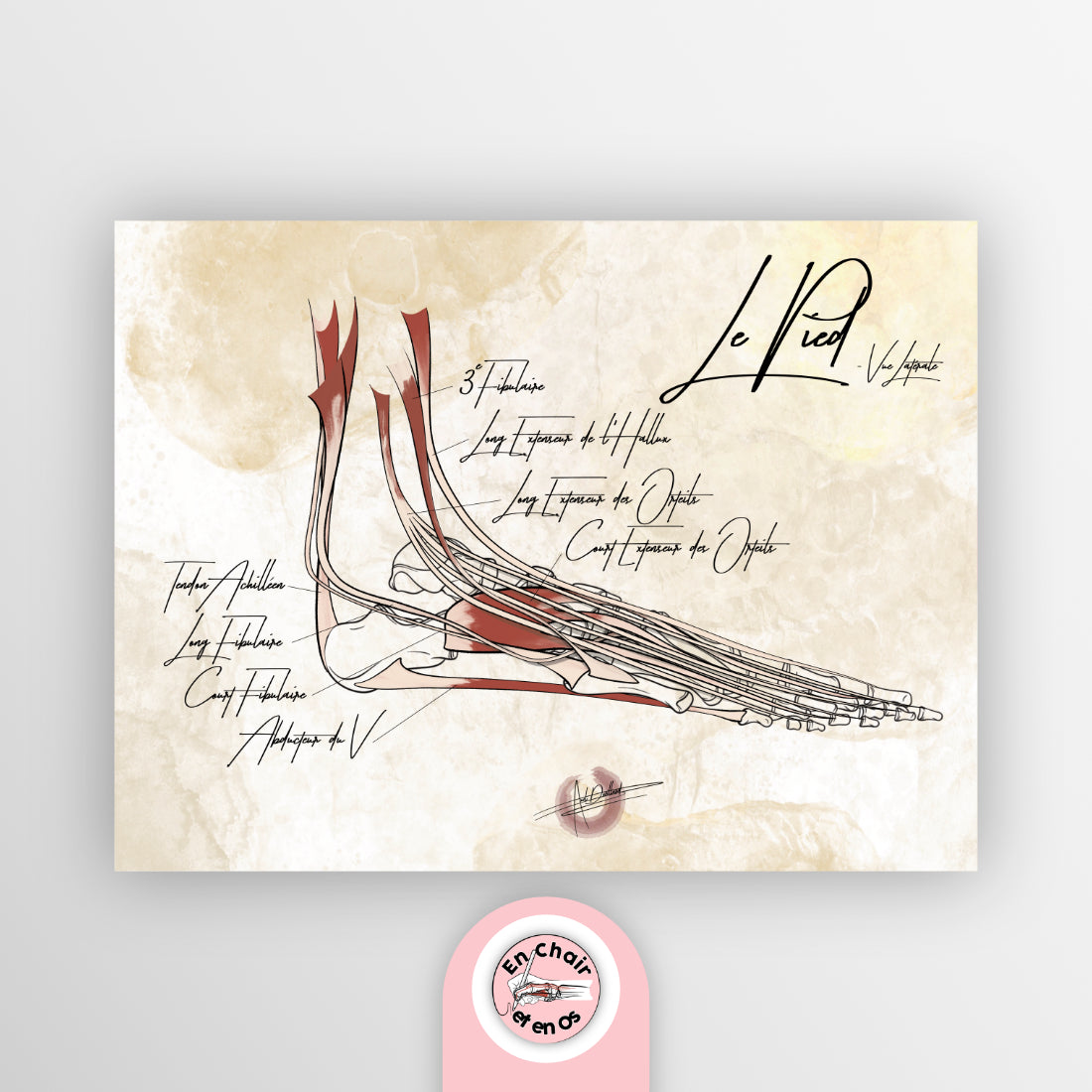
The foot, often overlooked in traditional teaching, deserves a central place. The Anatomy chart - Foot, lateral view is ideal for illustrating proportions, the angle of the calcaneus, muscular alignment, and fascial tension.
-
Such an anatomical illustration helps to draw anatomy with precision and to offer a rich educational model.
-
An anatomy book is not always enough to explain foot pathologies. But an image, a sketch, or a well-thought-out page changes everything.
-
This type of product, accessible in paperback or online drawing format, offers a concrete support for both therapist and patient.
In the context of practicing drawing, this illustrated anatomical base becomes much more than a simple support: it transforms into a true method of drawing that you can share with your patients through simple, fun exercises or during the various stages of rehabilitation.
Strengthening the patient-practitioner relationship through anatomical art
Breathing with the patient: the cranial diaphragm as an explanatory model
Among the elements most difficult to understand, the Anatomy chart: Cranial diaphragm remains a challenge. However, classic anatomical drawing, by representing its insertions and dynamics, becomes an effective anatomical tool.

-
The model presented offers a precise illustration that blends artistic anatomy with metabolic function.
-
Patients can thus visualize movement, tensions, and the impact of stress or emotional shock on the upper body.
You no longer have to struggle for words: a simple representation is enough. It guides, it structures, and it provides a basis for teaching your patients how to draw their pain, locate it, and above all, learn anatomy within a framework of comprehensive care.
The mouth as a mirror of the body: teeth at the heart of understanding
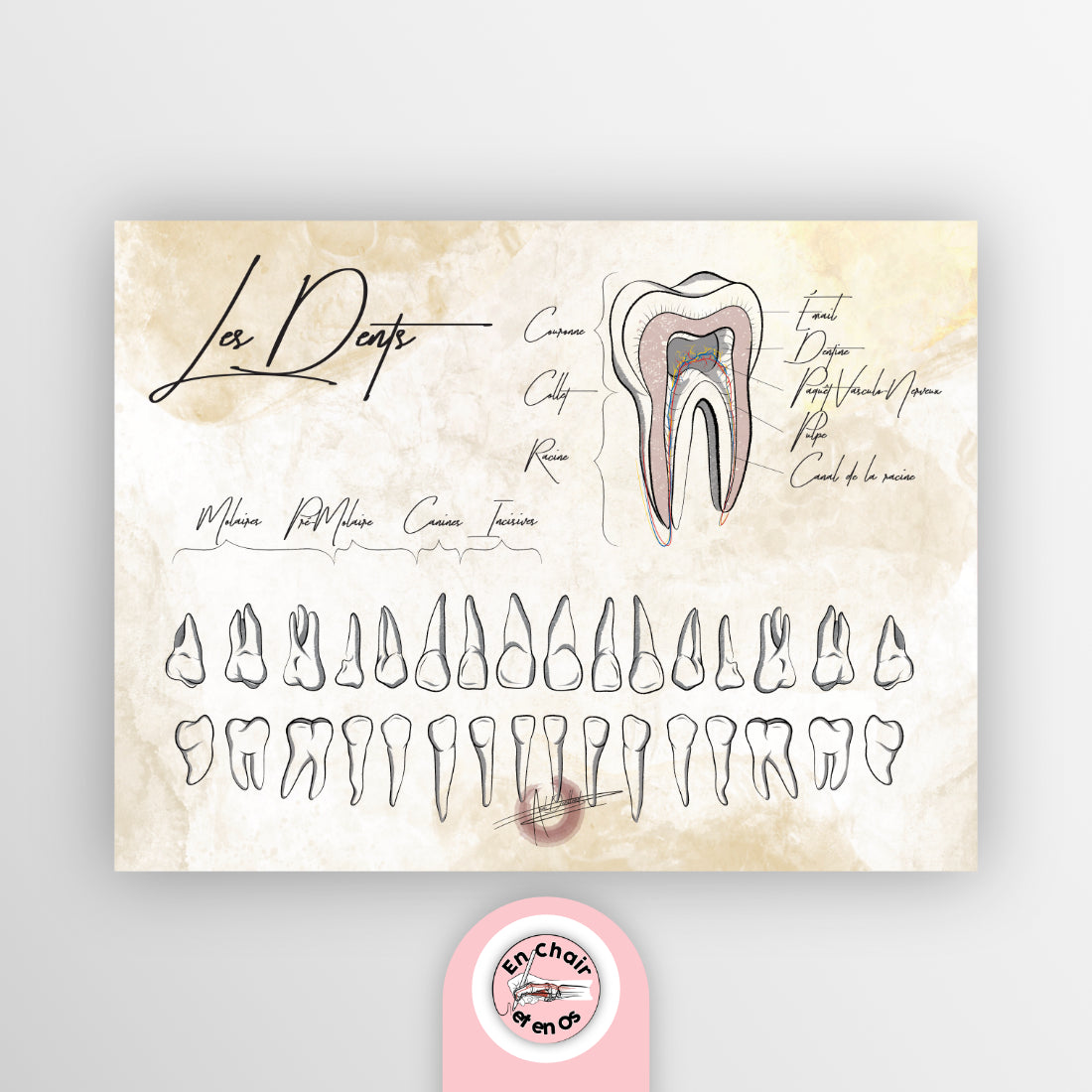
The Anatomy chart: Teeth is not intended solely for dentists. It allows for identifying anatomical correlations with the skull, posture, head, and spine.
-
Drawing the anatomy of the jaw is like creating a functional map of the human structure.
-
A minimalist sketch, well placed, makes it possible to propose drawing methods useful for becoming familiar with complex functional disorders.
This type of visual tool is therefore more than an ornament: it is a work base, a guide, and an illustrated book that can be read on the walls.
By offering these visual tools, you open the doors for the patient to an accessible and intuitive drawing practice, which helps them appropriate anatomy in a different way. This educational format, which is both fun and universal, adapts to all ages and levels, and fosters understanding gently and at their own pace.
Humanizing the medical space through the aesthetics of knowledge
Pregnancy: a sensitive and visual reality
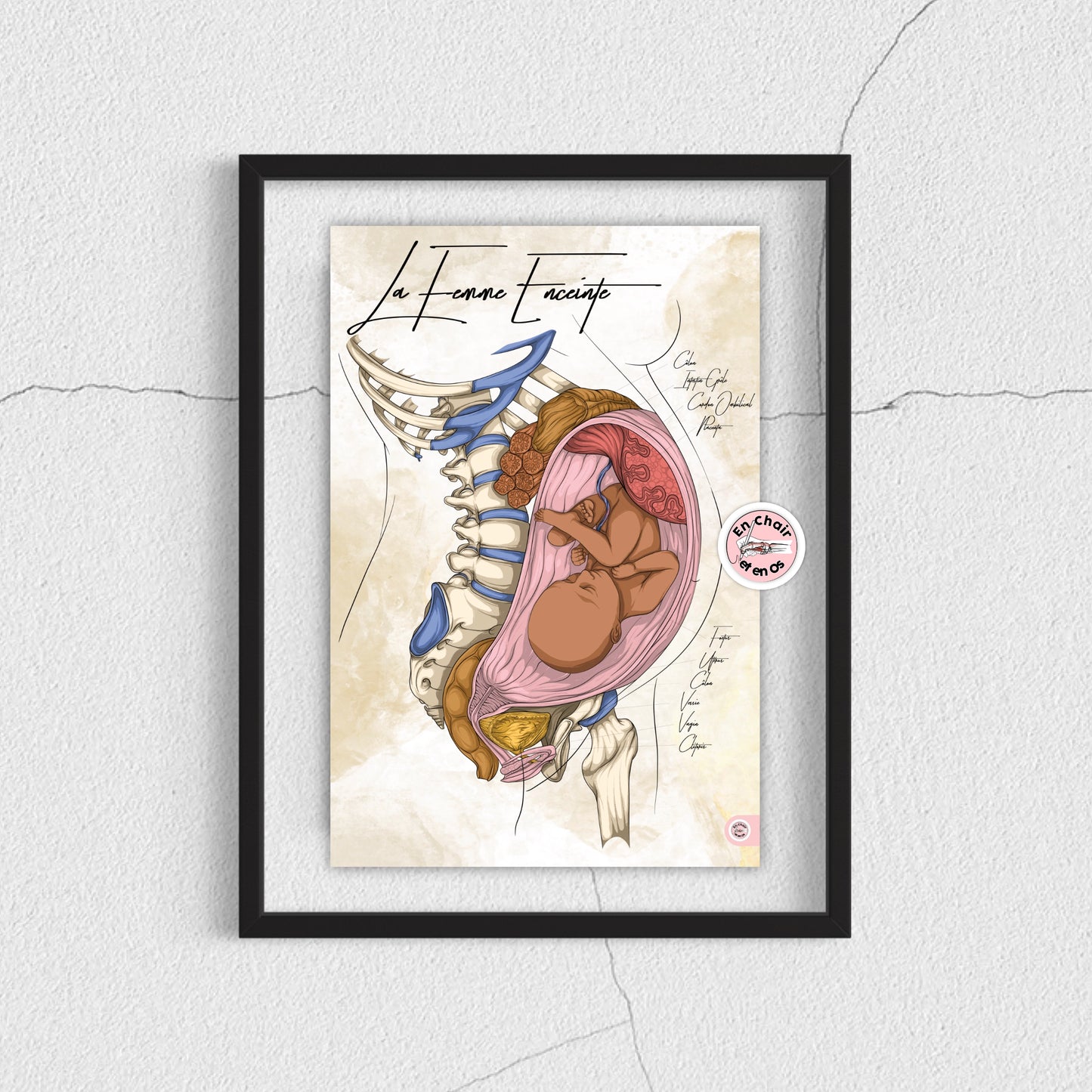
The Anatomy chart: Pregnancy allows for drawing the stages of gestation with touching and rigorous anatomical detail.
-
This type of artistic content links the anatomy of the trunk, the anatomy of the lower limb, digestive organs, and abdominal muscles.
-
It helps in drawing the human body in its totality, learning to read the movement of the uterus, the displacement of the viscera, and postural changes.
It is a gentle and effective way to show a future mother what is happening in her body without resorting to medical abstraction.
This illustrated page becomes a collection of snapshots of life. A book offers lines, but here the drawing becomes an experience.
Digesting information… thanks to digestive art
Finally, the Anatomy chart: Digestive tract organs offers a complete anatomical representation, rich in proportions, movements, and angles.

-
This complete sketch, structured like an anatomy book, can help explain functional digestive disorders, inflammatory pathologies, and visceral pain.
-
The drawing methods used in this chart allow one to learn how to draw human physiology based on internal elements and to approach human anatomy through drawing in a different format.
You no longer simply conduct a consultation: you share real understanding. You offer your patient a unique learning method, where the body they discover, that they draw… is their own. They become the central character in their own journey, an actor in their anatomy, and in their healing.
Conclusion
Investing in an anatomical drawing for your medical practice is investing in visual intelligence, clinical empathy, and patient education. Each chart, each illustration, each anatomical drawing becomes a work tool, an open book on the human body.
What if, starting tomorrow, your consultation room became a true illustrated anatomy book?
Discover it on our site En Chair et en Os: a complete collection, in paperback or online, of anatomical illustrations designed for healthcare professionals, artists, sculptors, the curious, and learners.
Because to draw is also to heal!