

Author: Naël El Kastani
Anatomical posters: an effective means of patient communication
Clearly and accurately illustrating medical concepts
In a medical office, one of the greatest challenges is explaining complex concepts in a clear and understandable way. This is where an anatomical poster becomes an essential product. Take, for example, the Anatomical Chart: Human Skeleton; this detailed anatomical model of the human body allows for the visualization of different parts of the human body, including bones, joints, and cartilage. During a consultation, particularly for a fracture or joint pain, an anatomical poster allows you to clearly display the problem area, thereby facilitating patient understanding.

This goes beyond simple explanation; it is a true visual aid that offers detailed information on the internal structure of the human body. By displaying such an anatomical poster in your workspace, you help your patients better understand their pathology and concretely visualize the affected areas. This improves communication, reduces misunderstandings, and strengthens the relationship of trust between the practitioner and the patient. A quality anatomical model of the human body thus becomes an essential element of your therapeutic approach, especially for musculoskeletal conditions.
Strengthening pedagogy and patient education
Human anatomy posters also play an important role in patient education. Let’s take the example of the Anatomical Chart: Human Musculature. This anatomy chart allows for a detailed visualization of all the muscles in the body, with a specific focus on those involved in certain pathologies or treatments. During consultations in physiotherapy or sports medicine, a human musculature poster can be used to explain how muscles interact with each other and how certain tensions or injuries can develop.

Displaying this anatomical chart in your healthcare facility offers a visual aid that facilitates the explanation of exercises to be performed or adjustments to be made to the patient's posture. This strengthens pedagogy and encourages a proactive approach to care, where the patient better understands the causes of their pain and the solutions proposed to improve their condition. By using an anatomy chart, you facilitate the transmission of information and optimize the effectiveness of your treatments.
Improving diagnostic accuracy and treatment planning
An essential support for anatomical analysis
One of the major advantages of anatomical charts lies in their ability to refine the analysis of pathologies. For example, the Anatomical Chart: Nervous System - Rodin's Thinker is a valuable tool for explaining the location of a neurological disorder to the patient. This anatomical model makes it easier to understand the impact of nerve compression, a herniated disc, or a stroke. An anatomical model of the nervous system allows you to display the nervous structures of the human body with precision, which facilitates the explanation of pathologies of the central and peripheral nervous systems.
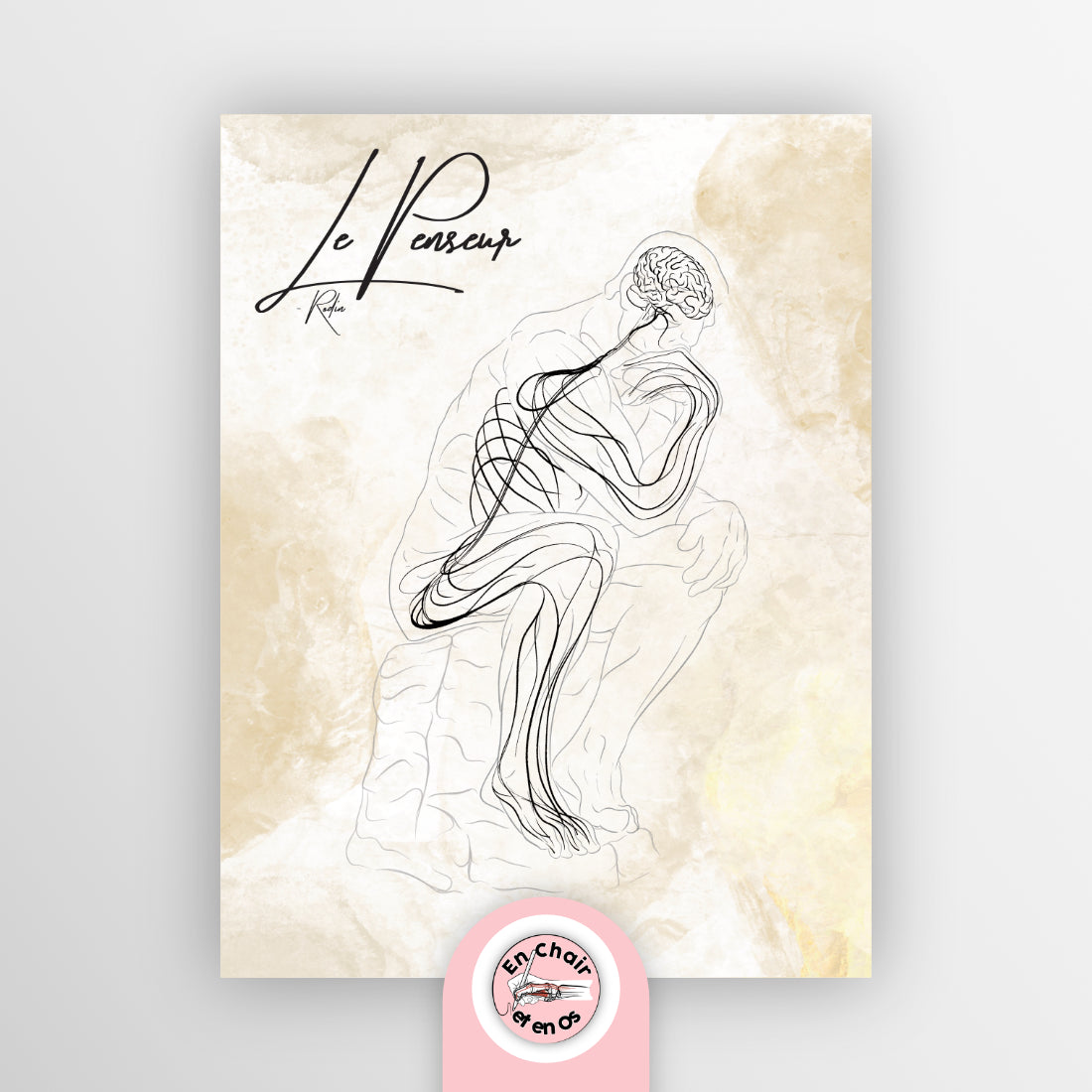
By displaying this anatomical chart in your consultation area, you allow the patient to have a more precise visualization of the anatomy of the human body, while facilitating diagnosis and treatment planning. It becomes an aid for doctors who can rely on an anatomy chart to better guide their diagnosis. This category of support is essential for ensuring quality continuing education, helping to maintain a high level of clinical competence for both medical students and healthcare professionals.
Optimizing treatments through more detailed visualization
Human anatomy posters are also valuable work tools for treatment planning. For example, the Anatomical Chart: Diaphragm Muscle Chains helps explain the interactions between respiratory muscles and how tensions in this area can influence posture and breathing. An anatomical chart of this type can be used to explain key points during the consultation and optimize care, whether it concerns respiratory physiotherapy treatments, muscle relaxation, or chronic pain management.
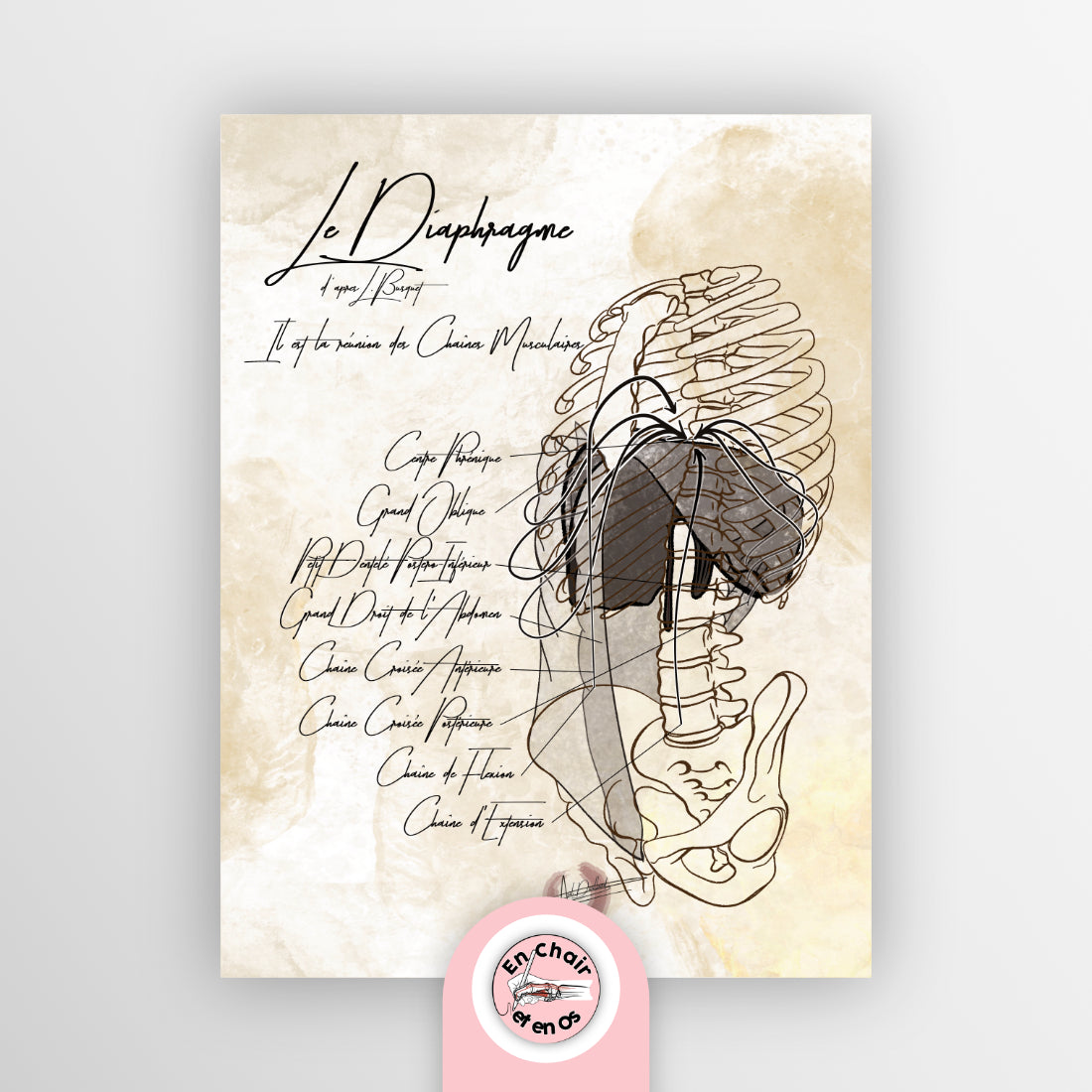
By using this anatomical chart, you not only help the patient better understand the mechanics of their body, but you also create a more personalized and precise therapeutic approach. This improves treatment efficacy and ensures that the patient follows recommendations adapted to their specific condition. Furthermore, information is transmitted more clearly, which facilitates understanding of prescribed care and improves patient compliance.
The impact of anatomical posters on the dynamics of the medical office
Creating an enriching and professional care environment
Anatomical charts play an essential role in the dynamics of your office by providing a dimension that is both visual and professional. One of the most useful anatomical charts in this context is the anatomical chart - Cervical Vertebrae. This specific anatomy chart allows for the visualization of the structure and function of the cervical vertebrae, a crucial element for consultations related to neck pain, posture disorders, or injuries. Displaying this anatomical chart in your healthcare facility strengthens the educational aspect of your consultations by facilitating the patient's understanding regarding the spine, and in particular, the cervical vertebrae.

The anatomical poster of the cervical vertebra makes it easy to explain injury mechanisms such as herniated discs, muscle tension, or even spinal pathologies linked to poor posture. Moreover, it becomes an excellent visual aid to clarify medical terms that are sometimes complex for your patients. Thanks to quality anatomical charts, like those offered on our site En Chair et En Os, you reinforce the impact of your explanations and improve communication by transmitting information in a clear and didactic way.
The aesthetic and functional asset of anatomical posters
Anatomical charts are not only functional; they also bring an aesthetic dimension to your office. For example, an Anatomical Chart: Lower Limb Muscle Chains can be used to display the structure of the human body in a visually appealing way, while serving as a support for consultations in physiotherapy or sports medicine. These anatomical posters are available in various formats, allowing them to be adapted to the space in your office.
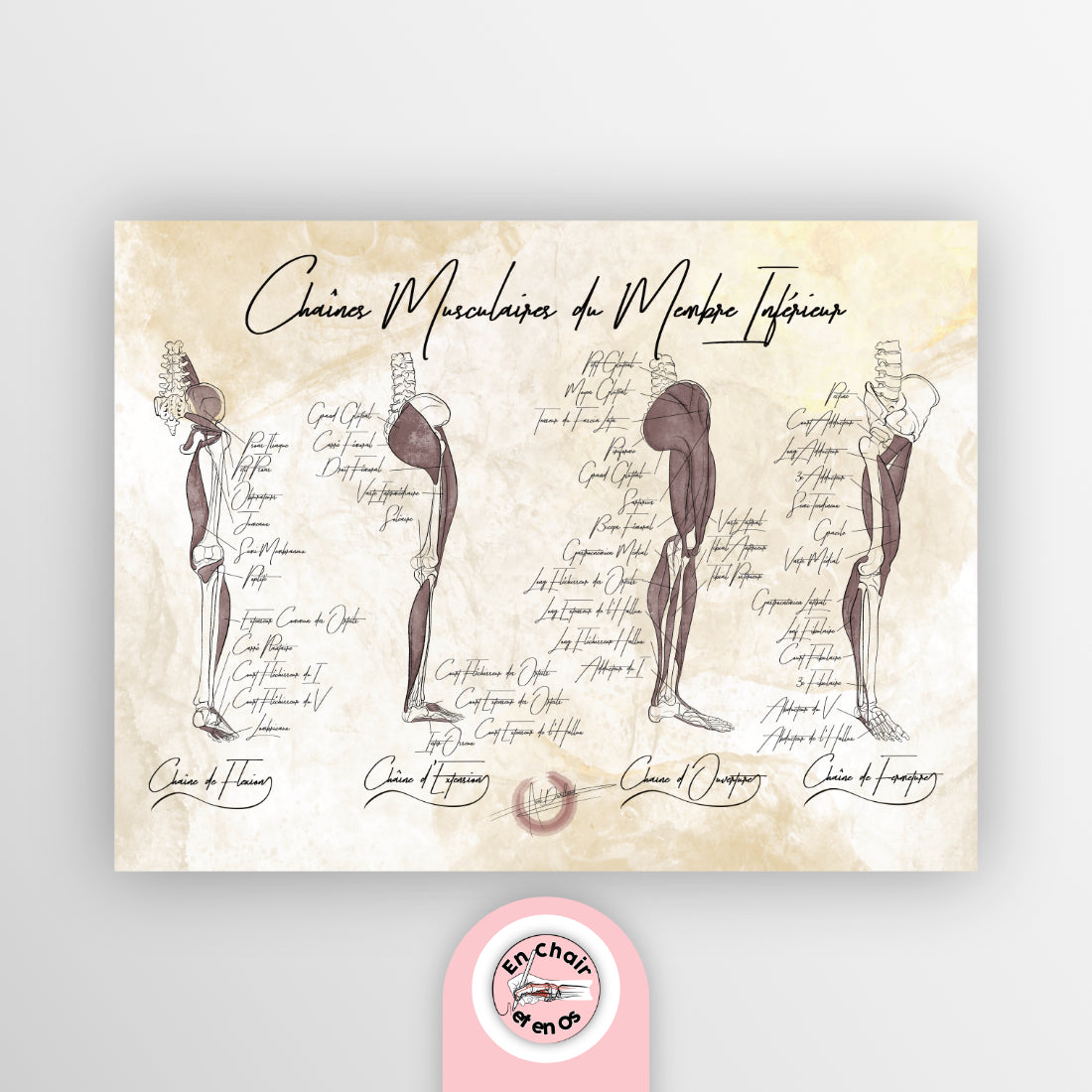
By choosing aesthetic and functional anatomical products, you create an environment where patients feel comfortable and confident. The anatomy charts become a decorative element in their own right, but also an educational tool. The anatomical poster thus becomes a tool that enriches your care space and gives added value to your services.
Conclusion
The use of anatomical posters in your medical consultations is a strategic approach that improves not only patient understanding, but also the quality of the care provided. Whether it is to display the anatomy of the human skeleton, the human musculature, or the muscle chains, these anatomical products enrich your consultations while promoting better communication with your patients. By integrating these anatomical charts into your medical office, you improve not only the precision of your diagnoses and treatments, but also the overall patient experience.