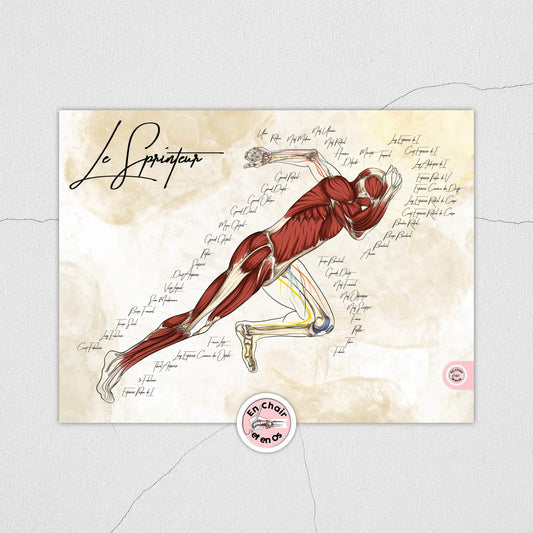
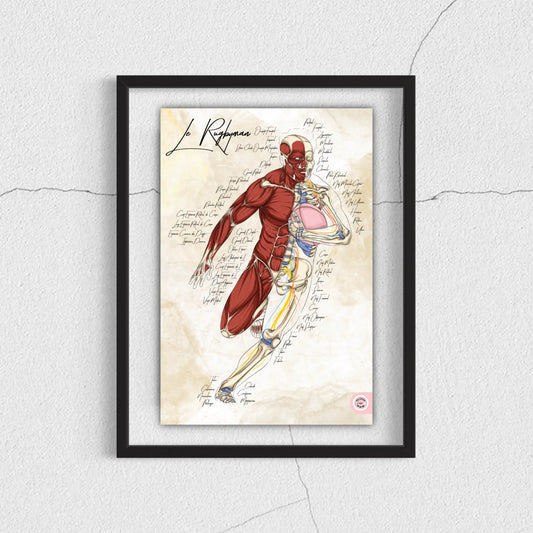
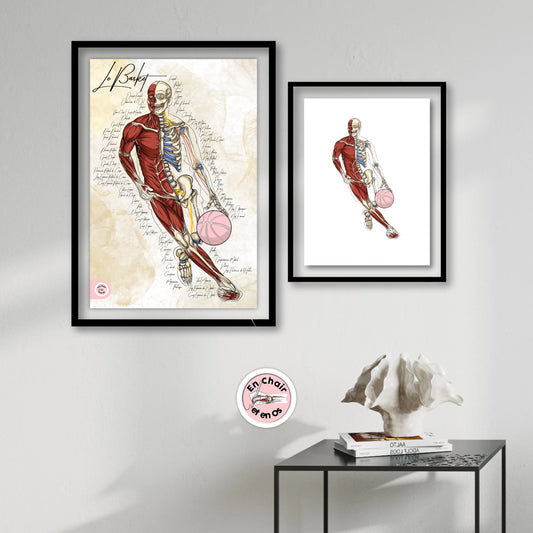
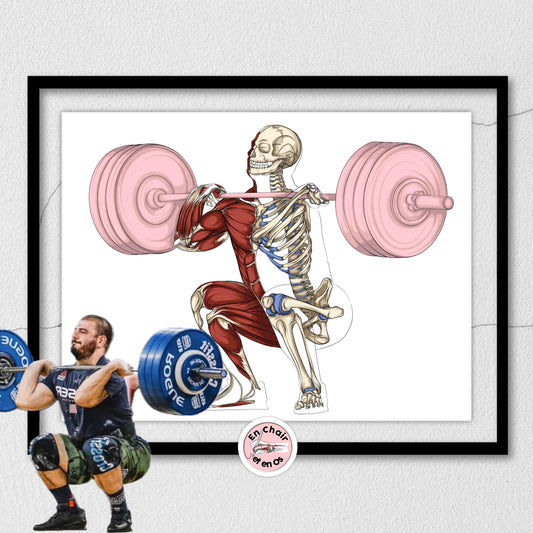
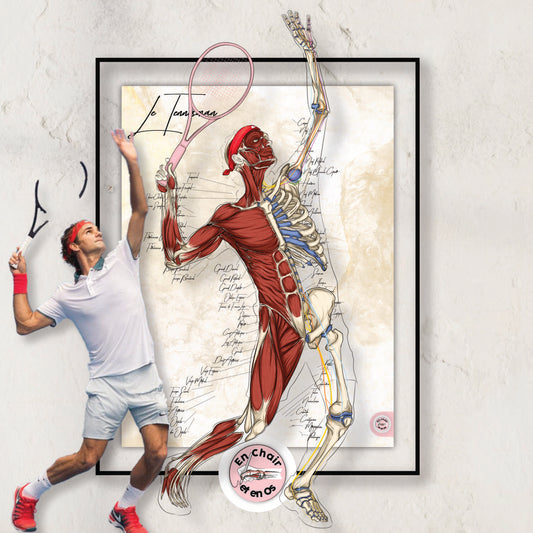
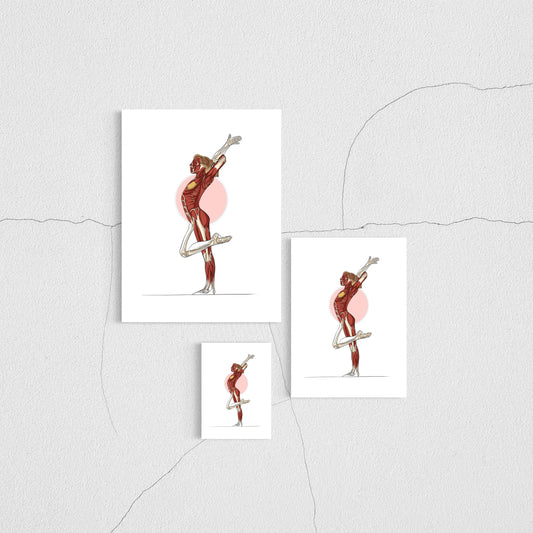
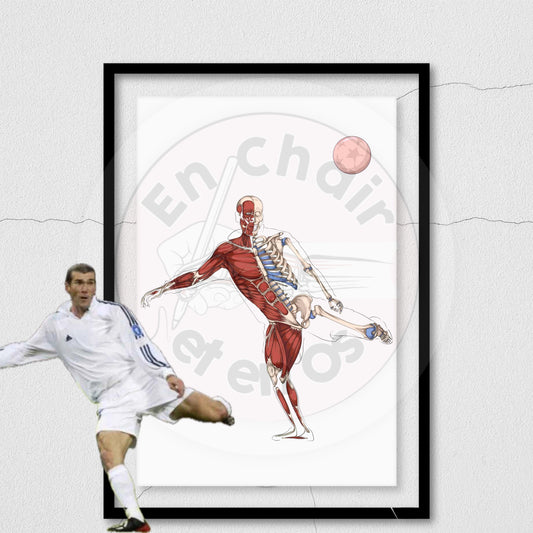
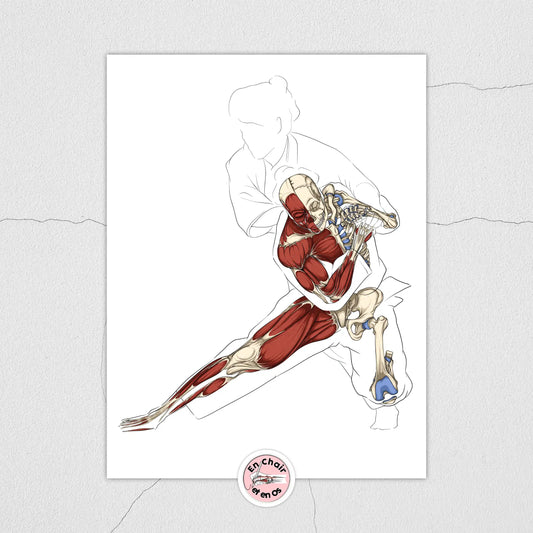
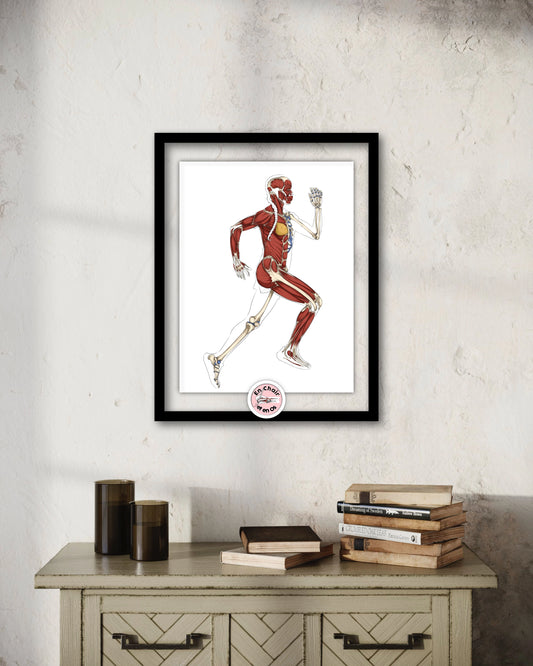
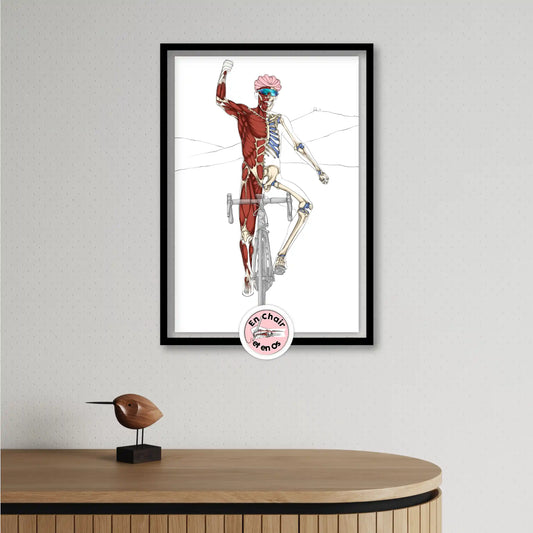
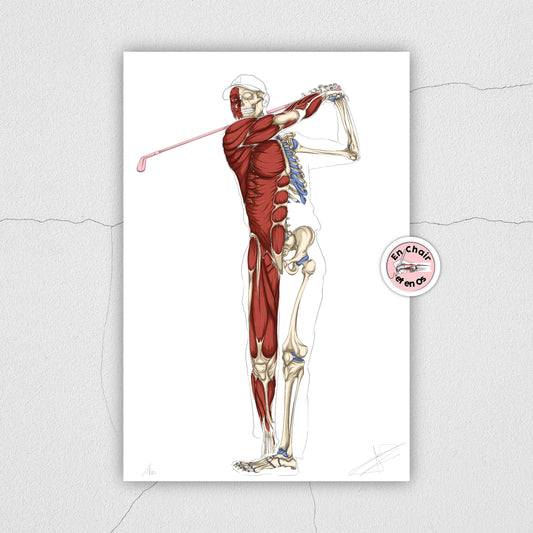
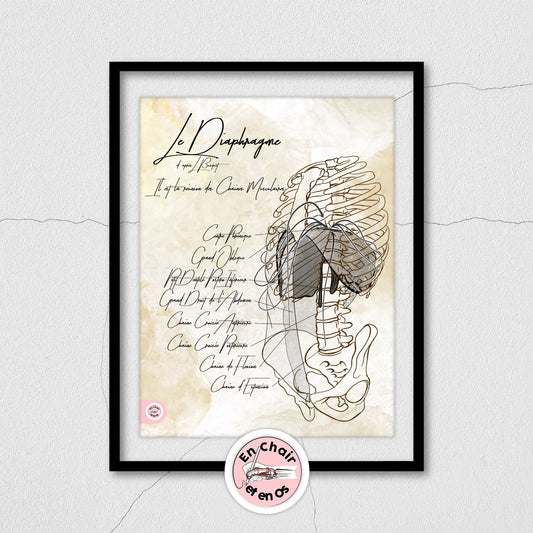
Anatomical charts of the muscles now occupy a central place in the world of medicine, of sport, and education. Much more than a simple poster or wall decoration element, they constitute a true educational product, a piece of scientific equipment, and an essential demonstration tool for healthcare professionals, teachers, students, and even enthusiasts of human anatomy. Their primary role is to make the complexity of the muscular system visible, understandable, and accessible.
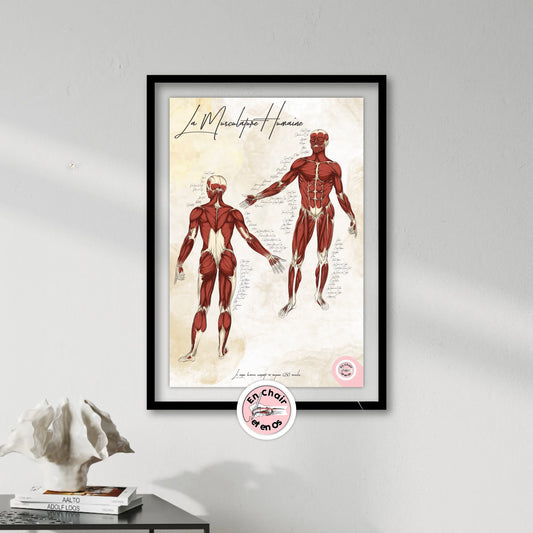
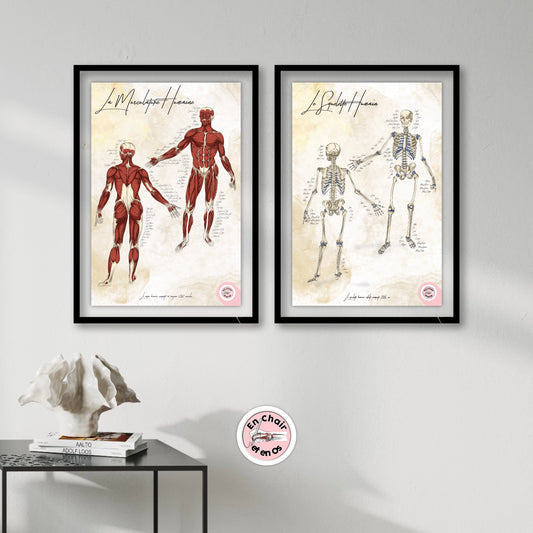
Each anatomical chart offers an exact overview of the body's muscles, their insertions, and their connections to the bones, ligaments, joints, and nerves. The representation is accurate, with precise scientific detail, and allows for both theoretical study and practical application in clinical, athletic, or educational settings. These anatomical charts of the musculature thus offer a detailed illustration of the human body, making it possible to understand the coherence of muscular chains and the interaction between muscles and joints.
An accurate scientific representation of the human muscular system
Anatomical models are based on a rigorous scientific foundation. Each anatomical poster is designed to faithfully represent the muscular system, from the superficial muscles to the deep planes. This muscular system comprises three main types of muscles: skeletal muscles (responsible for voluntary movement and flexion/extension), smooth muscles (located in internal organs, with involuntary action), and the cardiac muscle (specific to the heart).
They include the muscles of the trunk, of the arms, of the lower limbs, as well as specific zones such as the muscles of the head, the hand, the foot, or those involved in posture, breathing, or heart function. The vascular system (network of blood vessels) is also illustrated to show the relationship between muscles and blood circulation.
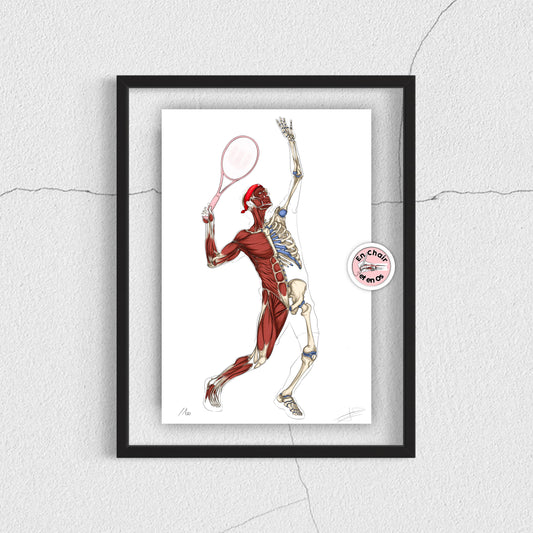
The biceps, triceps, dorsal muscles, or even the abdominal muscles are identified through precise work on color, height, and visual hierarchy. Some charts use the principle of the anatomical écorché, offering a layered view of muscular strata and allowing the depth and exact function of each muscle to be visualized. This approach is particularly useful in higher education, osteopathic training, sports rehabilitation, manual therapy, or teaching in a gym.
A central tool for patient communication and education
In a medical office, an anatomical chart quickly becomes an essential educational accessory and an indispensable aid. Explaining muscular pain, joint tension, or a pathology without visual aids remains abstract. Thanks to an anatomical poster, the practitioner can point to the exact spot concerned, explain the role of a muscle, ligament, or joint, and link symptoms to a precise structure.
This use of the anatomical chart facilitates patient education, improves understanding, strengthens trust, and highlights the professional's competence. It allows for the transmission of clear scientific information, without unnecessary jargon, and shows the interactions between trunk muscles, the spine, the shoulder, and other anatomical structures. This educational tool transforms the patient experience and facilitates medical education.
A major educational resource for teaching and study
In an educational setting, anatomical charts of the human musculature are widely used in physical therapy, osteopathy, sports science (STAPS) programs, or any health-related educational curriculum. They accompany classes, practical work, review sessions, and graphic demonstrations.
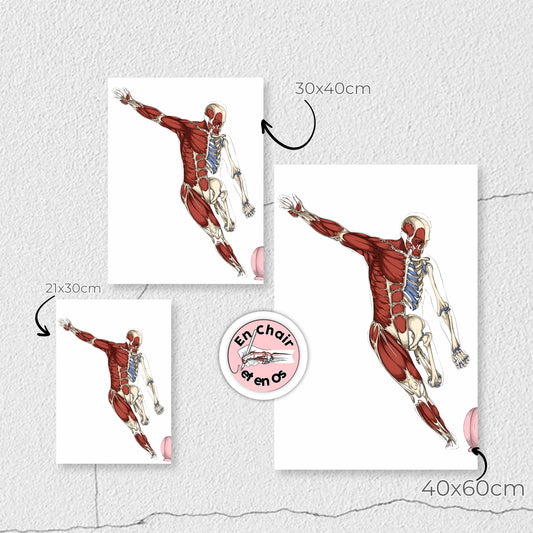
Thanks to their accurate muscular illustration and practical format, they allow students to learn and memorize structures more easily, understand the interactions between muscles and joints, and analyze movements of the human body. Available in different sizes and scales, they are an ideal educational resource. They are also useful for practical activities, educational quizzes, or group sessions, making learning more interactive and stimulating.
Each anatomical chart is an essential resource for ensuring the transmission of anatomical knowledge and facilitating understanding of the different parts of the body. The detailed legends accompanying each illustration allow for rapid identification of each anatomical element.
Anatomical charts in the service of sports and performance
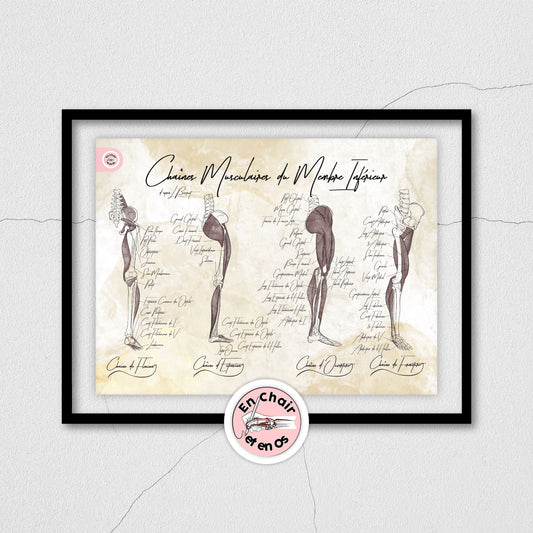
Anatomical charts for athletes naturally find their place in gyms, rehabilitation centers, and physical preparation facilities. They illustrate the mechanisms of movement, muscular coordination, and functional chains, from the knee to the ankle, and from the pelvis to the trunk. In bodybuilding, understanding the action of each muscle during flexion and extension is essential for improving performance.
Each anatomical model highlights the coherence of the muscular and skeletal system, which is essential for improving performance, preventing injuries, and adapting training programs. Athletes can thus visualize the muscles of the leg, the trunk, the joints, and their interaction, in order to better understand their limits and optimize their practice.
An educational, cultural, and decorative object
Beyond strictly medical or athletic use, anatomical charts have a cultural and artistic dimension. They can serve as interior decoration items in an office, a study, or a medical office. Some posters, inspired by vintage anatomical charts in a classic style, combine art and science, transforming a wall into an educational and aesthetic medium.
Mounted on the wall or placed on a rigid support, they constitute an educational resource that stimulates the interest and attention of students and learners, while facilitating the study of human anatomy and understanding of muscular function.
Different types of muscular anatomical charts
There are many types of anatomical charts, adapted to various uses and available in different formats:
-
Charts representing the entirety of human muscle anatomy,
-
Regional charts (digestive system, internal organs, nervous system, vascular system),
-
Charts specialized for athletes, physical therapists, or osteopaths,
-
Simplified models for a young or novice audience,
-
Highly detailed materials for higher education and scientific research.
Each option is accompanied by a detailed description, making selection and purchase easy. Explore our complete range of anatomical charts to find the model suited to your needs.
A resource adapted to all profiles
Anatomical charts are adaptable to all profiles:
-
Students, for review and stimulating interest in human anatomy,
-
Teachers for their lectures and demonstrations,
-
Healthcare professionals (physical therapists, osteopaths, doctors),
-
Athletes to understand the functioning of their musculature,
-
Enthusiasts and fans of anatomical illustration.
They can also make an original gift, combining art, aesthetics, and scientific education, and contribute to patient education. Each chart helps develop anatomical knowledge in a visual and practical way.
A comprehensive vision for a better understanding of the human body
Anatomical charts offer a coherent vision of the human body. They make it possible to link a pain or symptom to a specific structure, understand muscular compensations, and avoid a fragmented approach. They highlight the links between the spine, shoulder, trunk muscles, biceps, triceps, ear, and heart, as well as the nervous system and vascular system, thus offering a complete understanding of human anatomy.
This comprehensive vision helps in understanding the different relationships between the parts of the body, whether it concerns the skeleton, the muscular system, or the circulatory system. The blood vessels that supply the muscles, the role of the nervous system in muscular contraction (voluntary and involuntary), and the way in which the muscles are positioned in relation to the bones are clearly represented.
This global vision is crucial in clinical practice, sports, therapy, and teaching, to promote optimal care, more effective pedagogy, and a lasting understanding of the body. It also ensures a better transmission of anatomical and medical knowledge.
Conclusion
In conclusion, musculature anatomical charts are not merely decorative posters. They constitute genuine scientific equipment, pedagogical and visual tools of reference for understanding, explaining, and transmitting knowledge about human anatomy.
Explore our complete range of anatomical charts available in various formats and dimensions. Thanks to their detailed production, scientific rigor, and adapted format, they enrich learning, improve understanding of the body, and enhance professional practice.
Each printed chart represents an anatomical structure, ideal for a medical office, a training room, an educational space, or at home. These charts help healthcare professionals, students, physiotherapists, doctors, and pupils develop their anatomical knowledge visually and effectively.
Choosing a muscular anatomical chart means investing in a reliable, durable, and effective tool capable of transforming an abstract explanation into a clear and concrete understanding. Do not wait any longer to buy your anatomical chart online and add this essential educational tool to your teaching materials or your workspace. Each item is carefully prepared after ordering to ensure your complete satisfaction.
- Selecting a result triggers a page update.
- Opens in a new window.